



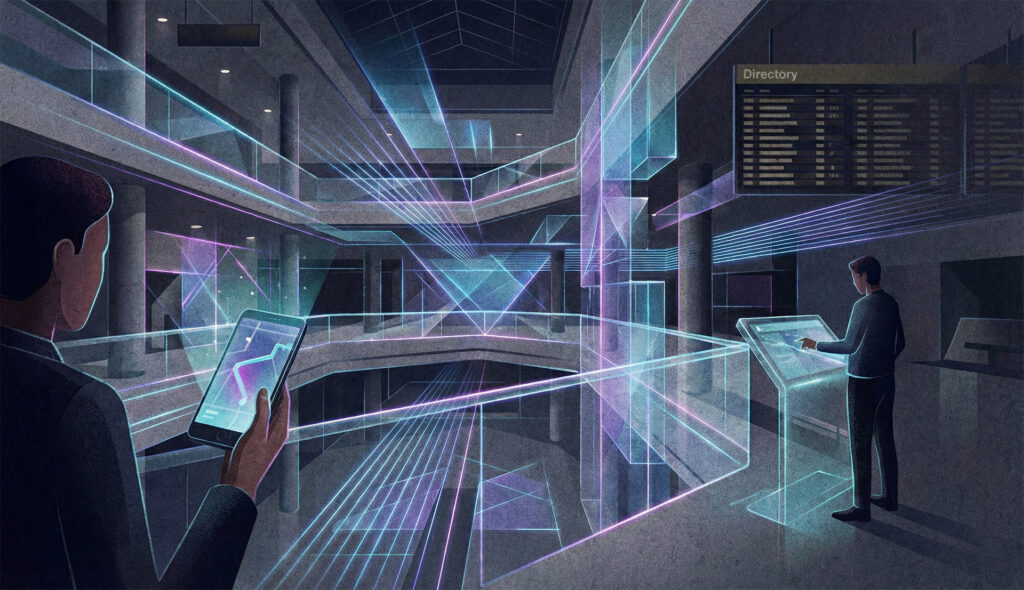
Picture this: a visitor walks into your shopping center, airport terminal, or mixed-use property. They pull out their phone, expecting the same seamless navigation they get on city streets. Instead, they find a static directory board that hasn’t been updated since last quarter. That disconnect costs you more than frustrated visitors. It costs tenant visibility, dwell time, and revenue.
Modern wayfinding has evolved far beyond printed maps and wall-mounted signs. Today’s commercial spaces compete not just on location or tenant mix, but on the quality of the navigation experience they deliver. The properties winning that competition have moved to intelligent, multi-platform digital systems that guide visitors effortlessly while generating actionable business insights.
Why Static Signage Falls Short in 2025
Traditional wayfinding worked when visitor expectations were lower. But smartphone navigation has fundamentally changed what people consider acceptable. Static signs now create friction at every turn.
The limitations are clear:
- No real-time updates: Store relocations, closures, or events require costly reprints or manual changes
- One-size-fits-all routing: No personalization for accessibility needs, language preferences, or visitor intent
- Zero data capture: No visibility into what visitors search for, where they go, or how long they stay
- Missed revenue opportunities: Static signs cannot promote vendors, trigger location-based offers, or measure campaign performance
According to industry research, properties with outdated navigation systems see measurably lower tenant satisfaction and shorter average visit durations. The cost of maintaining static signage often exceeds digital alternatives when factoring in print production, installation labor, and the revenue lost to poor visitor experiences.
What Modern Wayfinding Actually Looks Like
Digital wayfinding transforms navigation from a static utility into a dynamic engagement platform. The best systems share several core capabilities that separate them from basic digital directories.
Multi-Platform Access
Visitors should reach your wayfinding system wherever they are. That means interactive kiosks placed strategically throughout your property, mobile access via QR codes, and web integration for pre-visit planning. The key is seamless handoff between platforms. A visitor who starts at a kiosk should be able to transfer their route to their phone with a single scan.
Intelligent Search and Discovery
Smart search goes beyond store names. Visitors type “coffee” and see every café, kiosk, and vendor serving it. They search “kids clothing” and get filtered results by category. This search behavior also becomes valuable data, revealing what your visitors want most.
Turn-by-Turn Indoor Navigation
GPS doesn’t work inside buildings. Modern wayfinding uses indoor positioning technology to deliver accurate, step-by-step directions across multiple floors. This includes automatic rerouting around obstacles and wheelchair-accessible path options for visitors with mobility needs.
Real-Time Content Management
When a tenant moves locations or a pop-up opens for the weekend, your wayfinding system should reflect those changes instantly. Self-service portals let property teams update directories, promotions, and routing without waiting on vendors or technical support.
The Business Case for Digital Wayfinding
Operational efficiency matters, but the stronger argument for modern wayfinding lies in revenue generation and measurable ROI.
Tenant Visibility and Sales Digital directories with sponsored listings and on-map advertising give tenants new exposure. Location-based push notifications can drive foot traffic to underperforming areas or highlight flash sales. Properties report measurable increases in tenant satisfaction when offering these promotional tools.
Data-Driven Decision Making Every search, route request, and interaction generates data. Analytics dashboards reveal peak traffic periods, popular destinations, underutilized zones, and trending search terms. This intelligence informs everything from lease negotiations to event planning to marketing strategy.
Accessibility and Inclusivity Properties that prioritize accessible wayfinding serve broader visitor populations. Audio-guided navigation, multi-language support, and wheelchair-friendly routing are not just compliance measures. They represent competitive advantages that attract visitors who might otherwise avoid complex commercial spaces.
What to Look for in a Wayfinding Platform
Not all digital wayfinding solutions deliver equal value. When evaluating platforms, prioritize these capabilities.
Customization depth: Your wayfinding system should reflect your brand identity completely. That means custom colors, logos, fonts, and UI design. Avoid platforms that force generic templates onto every client.
Omnichannel integration: Kiosk, mobile, and web platforms should work together seamlessly. APIs should connect with your existing CMS, CRM, and loyalty programs. The platform should meet visitors wherever they are.
AI-powered assistance: The most advanced wayfinding systems now include AI assistants that respond to natural language queries. Visitors can ask questions by text, voice, or even photo, receiving context-aware responses trained on your specific property data.
Spatial analytics: Look for platforms offering heat maps, dwell time tracking, search trend analysis, and foot traffic measurement. The ability to prove ROI on events and campaigns separates useful tools from truly valuable ones.
Accessibility features: Native integration with assistive technology platforms like the Lazarillo App ensures your property serves visitors with visual impairments and mobility challenges. This capability should be built-in, not bolted on.
MapVX delivers all of these capabilities through a unified platform designed specifically for commercial spaces. Every implementation is custom-built to match the client’s brand, layout, and strategic goals. The system deploys across web, mobile, and kiosk interfaces with QR code handoff between platforms, ensuring visitors always have access to navigation support.
Implementation: Faster Than You Think
Many property teams delay wayfinding upgrades assuming months-long implementation timelines. Modern platforms have compressed that process significantly. With accurate floor plans and clear objectives, a complete digital wayfinding system can launch in as little as six weeks.
The process typically follows this path:
- Discovery and planning: Understanding your space, tenant mix, and business objectives
- Map creation: Building accurate digital layouts using floor plans and LiDAR scanning
- Integration and testing: Connecting platforms, installing kiosks, and validating functionality
- Launch and optimization: Going live with dedicated support and ongoing performance monitoring
MapVX provides white-glove onboarding with a dedicated success team that handles technical complexity while keeping your internal burden minimal. Post-launch, a self-service portal enables real-time updates without technical dependencies.
The Path Forward
Static signage served its purpose in a simpler era. Today’s visitors expect more, and properties that fail to deliver will feel the impact in tenant retention, visitor satisfaction, and bottom-line performance.
Digital wayfinding is no longer a future consideration. It’s a current competitive requirement. The properties implementing intelligent navigation systems now will capture the benefits earliest while building the data foundations that inform smarter decisions for years to come.
Ready to transform navigation in your commercial space? Book a demo with MapVX to see how customized digital wayfinding can drive visitor engagement, tenant success, and measurable ROI for your property.