


The average shopper today has more options than ever. They can browse from their couch, pick up curbside, or visit a dozen competing properties within a short drive. So when a customer does walk through your doors, keeping them engaged long enough to spend more is the real competitive advantage. That’s where gamification comes in.
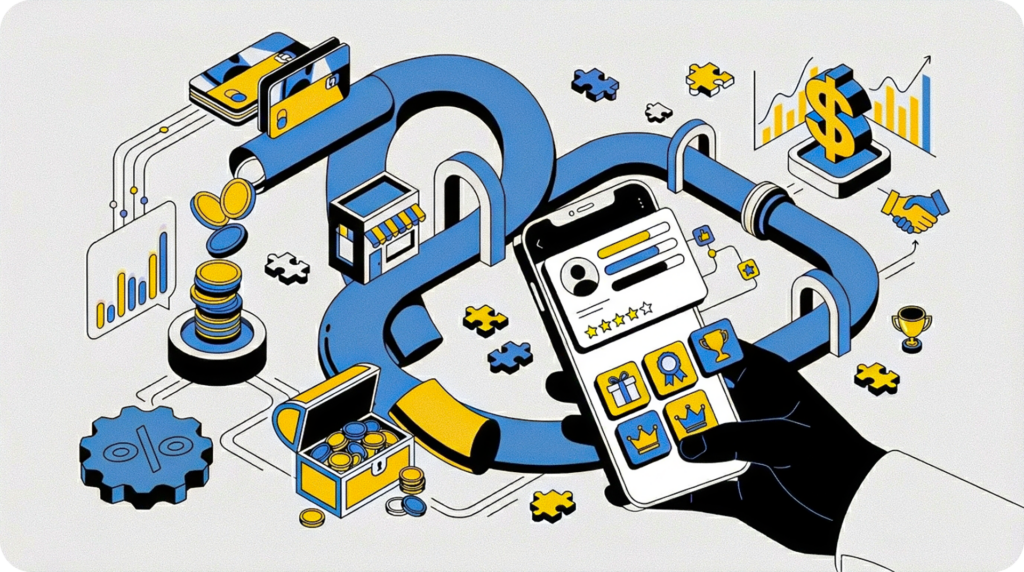
Shopping center gamification applies game mechanics — points, challenges, rewards, and progress milestones — to the retail environment. The goal is straightforward: make visiting your property more fun, more rewarding, and more likely to happen again.
Major industry players are already moving in this direction. Simon Property Group has publicly placed gamification on its 2026 roadmap, drawing inspiration from programs like Starbucks Rewards and McDonald’s Monopoly to reimagine what loyalty could look like for shopping centers. If the largest mall operator in North America is prioritizing this, the question for every property team is no longer whether to adopt gamification — it’s how to implement it effectively.
What Gamification Actually Means for Shopping Centers
Gamification in the retail context is not about turning your property into an arcade. Instead, it’s about layering structured incentives over everyday shopping behaviors to drive measurable outcomes.
Common tactics your property can deploy today include:
- Check-in rewards: Shoppers earn points simply for visiting the property, incentivizing repeat trips and increasing visit frequency.
- Scavenger hunts and map challenges: Visitors are guided to discover new stores or zones they might otherwise skip entirely.
- Loyalty milestones: Tiered rewards unlock as shoppers accumulate points, encouraging escalating spend with each visit.
- Double-point events: Time-limited promotions tied to on-mall activations or seasonal campaigns drive urgency and foot traffic.
- Referral bonuses: Members earn rewards for bringing new shoppers into the loyalty ecosystem, compounding your customer retention efforts.
Each of these mechanics targets a core retail KPI — whether that’s dwell time, visit frequency, tenant discovery, or average transaction value.
Traditional Loyalty vs. Gamified Loyalty: What’s the Difference?
The gap between a standard punch card and a fully gamified loyalty program is significant. Here’s a direct comparison:
| Factor | Traditional Loyalty | Gamified Loyalty |
|---|---|---|
| Engagement model | Passive (transactional) | Active (behavioral) |
| Shopper motivation | Discount-driven | Experience-driven |
| Data collected | Purchase history only | Movement, dwell, discovery |
| Personalization | Limited | High (location and behavior-based) |
| ROI visibility | Difficult to attribute | Measurable and real-time |
The shift from transactional to behavioral loyalty is where the real ROI lives. When shoppers engage with your property beyond just making a purchase, you capture richer data, build stronger habits, and create more opportunities for targeted monetization.
How Do You Implement Gamification on an Interactive Map?
Your interactive shopping center map is one of the most underutilized tools for gamification deployment. It’s also one of the most powerful. The map is the one digital touchpoint that captures the full physical footprint of your property — and embedding gamification mechanics directly into that experience creates a seamless engagement loop.
Q: Why does the map matter for gamification?
The map is where shoppers orient themselves, discover tenants, and plan their visit. When gamification lives inside the map, every visit naturally becomes a new opportunity to earn, explore, and progress. Additionally, the map generates behavioral data — such as foot traffic patterns and search trends — that you simply cannot collect through a standalone loyalty app.
Q: What gamification features can live inside an interactive map?
The most practical implementation isn’t building new game mechanics into the map itself — it’s using the map to surface the gamification programs that tenants and the property already run.
When a shopper taps on a store in the interactive directory, a vendor profile card pulls up with the store’s details. That profile card is where the integration lives. Property teams and individual tenants can embed direct links to their loyalty programs, challenge check-ins, reward redemptions, or promotional events directly inside the card. Shoppers don’t need to hunt for a separate app or remember a URL — the path to participate is already there, in the moment they’re looking at the store.
This matters because friction is the biggest killer of loyalty program participation. The fewer steps between “I’m standing near this store” and “I just earned points,” the higher the engagement rate. The map becomes the front door to every gamification experience on the property, regardless of whether those programs are run by mall management or individual tenants.
Q: How do you prove the ROI of a gamification program?
This is where spatial analytics become critical. Tracking which zones drive the most engagement, how gamification affects dwell time, and which rewards produce the most repeat visits gives your team the data to optimize the program continuously. Without this layer, gamification is an experiment. With it, it becomes a measurable, evidence-based revenue driver you can report on every quarter.
Turning Gamification into a Long-Term Revenue Engine
Gamification works best when it connects the shopper experience to tenant performance and property revenue simultaneously. A well-designed program does three things at once: it increases foot traffic for individual tenants, it builds emotional loyalty to the property as a whole, and it creates new monetization channels for the management team.
That’s the shift worth internalizing; gamification is not a marketing gimmick. When it’s tied to your digital directory, your loyalty platform, and your advertising infrastructure, it becomes a business intelligence layer that makes every visit more valuable for everyone involved.
MapVX’s shopping center mapping platform is built for exactly this kind of integration. The platform connects interactive maps with loyalty program data, custom integrations, and real-time analytics — giving property teams the technical foundation to launch, track, and scale gamification programs without building custom technology from scratch.
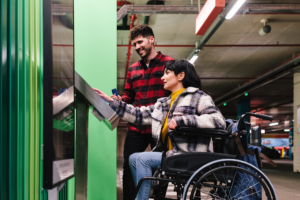
Because every MapVX map is custom-built to fit the property’s brand and layout, gamification features are designed to match your existing loyalty ecosystem rather than forcing a generic approach. Whether you’re surfacing tenant reward programs through vendor profile cards or embedding participation links directly into digital kiosks placed throughout the property, the platform adapts to your program rather than the other way around.
The Competitive Window Is Now
Simon Property Group’s 2026 gamification push signals that the industry is approaching an inflection point. Early adopters will build loyalty habits and proprietary behavioral data before competitors catch up. Waiting to evaluate this technology means ceding that ground to properties that move first.
If your team is ready to explore what shopping mall gamification could look like for your property, the best first step is seeing the technology in action. Book a demo to see how MapVX can bring gamification to life on your interactive maps.