



A shopper walks past your newest boutique without a second glance. Another spends twenty minutes wandering, trying to remember where they saw that sale sign. A third leaves the food court without realizing their favorite restaurant just launched a limited-time discount three stores down. These aren’t edge cases – they’re daily occurrences costing shopping centers millions in lost revenue. The problem isn’t foot traffic. It’s that most of that traffic never connects with the offers that would convert them into buyers.
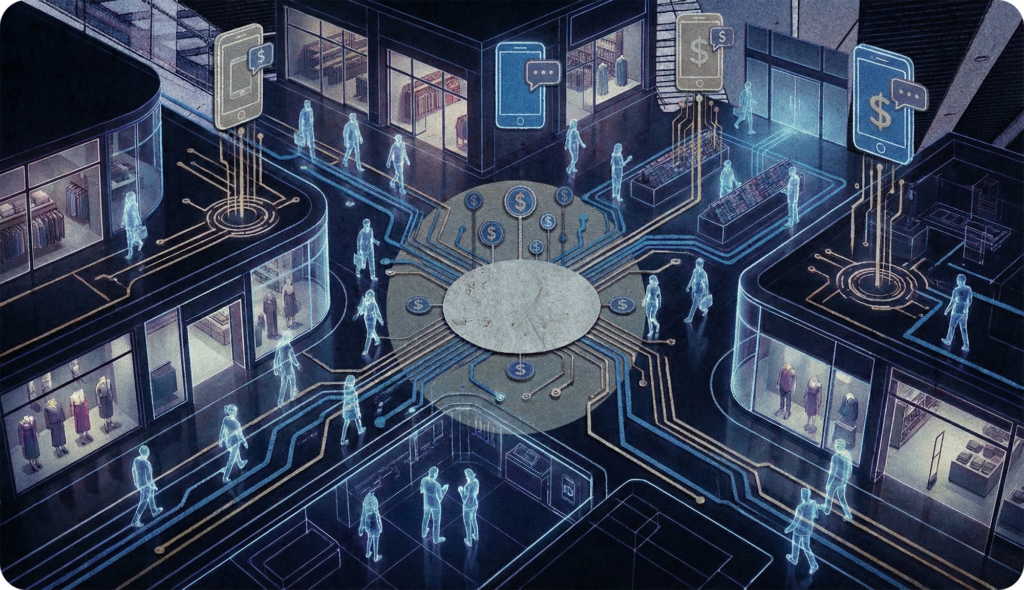
Location-based promotions solve this disconnect by delivering the right offer at the right moment based on where shoppers actually are. Instead of broadcasting generic deals and hoping someone notices, you’re triggering targeted notifications when a customer enters a specific zone, searches for a relevant product, or passes by a participating retailer.
Why Traditional Mall Marketing Leaves Money on the Table
Most shopping center marketing operates on hope. You invest in email campaigns, social media ads, and printed flyers, then cross your fingers that the right people see them at the right time. However, even when they do, there’s friction: shoppers have to remember the offer, find the store, and hope the promotion is still valid when they arrive.
The proximity problem is real. According to Insider Intelligence, location-based marketing drives up to 80% higher engagement than non-targeted campaigns. Why? Because a 30% off notification means something different when you’re standing fifty feet from the store versus reading about it from home. Immediacy creates urgency. Context drives action.
The Proximity Paradox: Why More Isn’t Always Better
Here’s what most shopping centers get wrong: they think more promotions equal more sales. The data tells a different story. In fact, shoppers who receive 5+ notifications during a visit are significantly less likely to make purchases than those who receive 2-3 targeted offers. The problem isn’t attention – it’s overwhelm.
This is why effective location-based promotions require strategy, not just technology. The goal isn’t to bombard shoppers with every deal in your center. It’s to surface the right offer at the right moment based on demonstrated interest and immediate proximity.
How Location-Based Promotions Actually Work in Practice
The mechanics are straightforward but powerful. Shoppers interact with your digital infrastructure – scanning a QR code, opening a mobile app, or using an interactive kiosk – and grant location permissions. As a result, the system tracks their position and triggers notifications based on predefined zones, search behavior, or time-based campaigns.
Here’s what this looks like:
- A family enters and receives a welcome message highlighting kid-friendly stores
- Someone searches “running shoes” and sees a flash sale notification from the athletic store
- Weekend traffic spikes near the food court at 12:30pm, automatically triggering lunch specials
Moreover, the system works proactively. If analytics show certain zones consistently underperform, you can drive discovery by offering exclusive deals to anyone who visits.
Three Ways Location-Based Promotions Drive Revenue
Increased Conversion Rates
Generic advertising has built-in waste. In fact, you pay to reach thousands of people who may never visit your center or who see your message at the wrong time. Location-based promotions eliminate this inefficiency by targeting only active shoppers at the moment they can act. Research from the Location Based Marketing Association found that proximity-triggered offers generate conversion rates 2-3x higher than traditional digital ads.
Higher Tenant Satisfaction
Retailers want one thing: results. Consequently, when you can demonstrate that your promotional infrastructure drives measurable traffic to their stores, lease negotiations transform. Tenants aren’t just paying for square footage – they’re investing in a partnership that actively supports their sales goals.
Actionable Analytics
Beyond immediate sales, these promotions reveal patterns that shape your long-term strategy. You learn which zones drive engagement, which product categories get the most searches, and which tactics yield the best ROI.
Choosing the Right Location-Based Promotions Platform
Not all systems deliver equal results. When evaluating solutions, look for these capabilities:
Granular zone control: Target individual stores, wings, or custom-defined areas independently
Real-time triggering: Promotions fire based on current location and behavior, not delayed data
Multi-platform integration: Seamless performance across kiosks, mobile devices, and web interfaces
Self-service management: Marketing teams launch and modify campaigns without technical support
Performance tracking: Measure impressions, conversions, and dwell times by zone and campaign
How to Integrate Location-Based Promotions Into Daily Operations
The best systems build marketing directly into navigation. No add-ons. No afterthoughts. When shoppers use interactive maps to find stores or search for products, they’re already engaged – the ideal moment to surface relevant offers.
For example, a shopper heading toward a shoe store might receive an alert about a flash sale. Someone searching “birthday gifts” could see promotions from three nearby retailers. The experience feels helpful rather than intrusive because the offers align with demonstrated intent.
Solutions like MapVX demonstrate this approach by integrating advertising into interactive maps and digital directories. Additionally, retailers can sponsor search results, run time-sensitive campaigns, or trigger geofenced notifications within the same platform shoppers use for navigation. The system also incorporates AI-powered assistance that handles natural language queries, making the experience conversational rather than transactional.
The analytics component transforms raw data into actionable revenue opportunities.
What you can track:
- Search trends by hour and day
- Foot traffic patterns by zone
- Campaign performance metrics
- Dwell time and engagement rates
How you act on it: Weekend spike near the food court? Schedule lunch promotions for Saturday at 12:30pm. High search volume for “kids clothing”? Launch targeted campaigns for family retailers. Promotion underperforming? Adjust messaging and retest within hours.
Common Questions About Location-Based Promotions
Won’t constant notifications annoy shoppers? Only if implemented poorly. Properly configured systems limit frequency (2-3 per visit maximum) and ensure relevance through zone targeting and search behavior. Moreover, shoppers can control notification preferences.
What if shoppers don’t want to share location data? Location permissions are always opt-in. However, 68% of shoppers willingly share location when they understand the benefit: relevant offers and faster navigation. The key is transparent value exchange.
How quickly can we see ROI? Most shopping centers see measurable results within 4-6 weeks of launch. Early indicators include increased map usage, higher search engagement, and improved dwell times in promoted zones.
From Foot Traffic to Revenue
Location-based promotions change the game: from hoping shoppers find offers to putting offers in their path. Instead of running generic campaigns with unclear ROI, you track performance with precision and optimize in real time.
Ultimately, the result is higher revenue per visitor, stronger tenant relationships, and competitive differentiation in an increasingly challenging retail landscape.
Ready to turn foot traffic into measurable revenue? Book a demo to see how intelligent location-based promotions can transform your shopping center’s marketing performance.